

Blog Information
LIULIAN CHAIN MANUFACTURING
2024-03-15
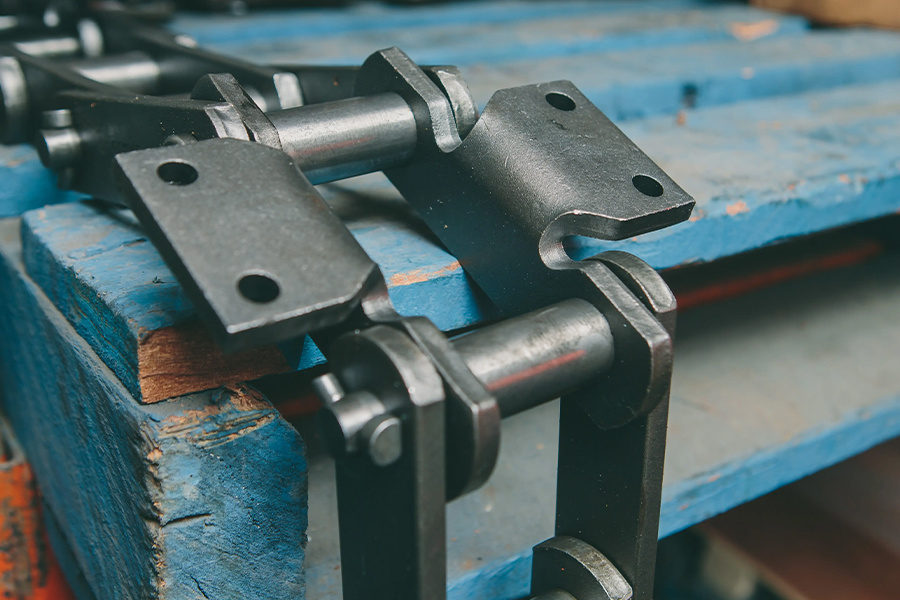
Conveyor chain standards and requirements
The standards and requirements for conveyor chains involve multiple aspects. The main contents are as follows:
2024-01-25
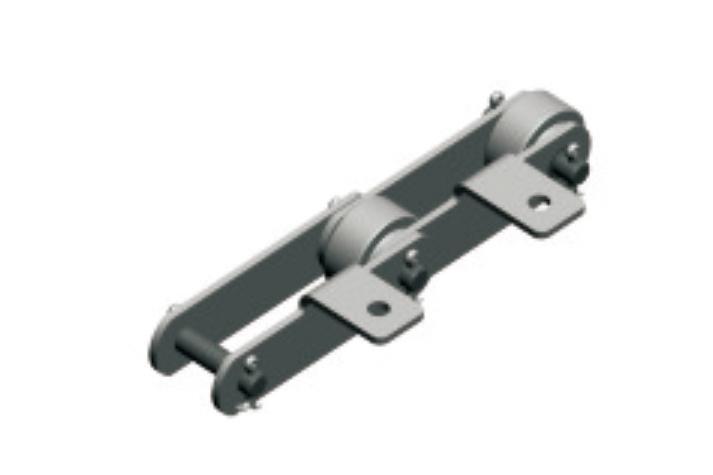
Conveyor chain standards and requirements
Standards and requirements for conveyor chains include the following aspects:Structural design: It should have reasonable, safe, and stable characteristics, and consider the load capacity, transmission efficiency, and ability to cope with various working conditions of the conveyor chain.

2023-03-21
Characteristics of belt conveyor chains
Since its invention in 1795, the belt conveyor has undergone two centuries of development and has been widely used in various industries such as electricity, metallurgy, coal, chemicals, mining, and ports. The third industrial revolution, in particular, brought about the adoption of new materials and technologies, ushering in a new era for belt conveyor development. Today, in terms of conveying capacity, distance, and economic efficiency, it can rival train and automobile transportation, forming a three-legged stand and becoming an industry that countries are vying to develop.
2022-12-26
The "Twelfth Five-Year Plan" period will be a crucial strategic opportunity for China's fastener industry to transition from large to strong. During this period, China will move from the mid-stage to the late stage of industrialization. The significant characteristics are: cost advantages will gradually be challenged, technological advantages have enormous potential, the marginal benefits of R&D and technological investment will increase, and capital-intensive and technology-intensive industries will face rapid development opportunities. As cost advantages are lost, technological advantages will timely replace cost advantages and take the leading position. Basic parts, such as fasteners, are not only the foundational industry of China's equipment manufacturing industry but also an important foundation for various fields of national economic construction. During the "Twelfth Five-Year Plan" period, while maintaining some cost advantages, the industry must rely on technological progress, quality improvement, and new advantages such as product cost-effectiveness to achieve sustainable development. It is estimated that the total industry output will reach 7.5 to 8 million tons by the end of 2015. Under the general situation of expanding exports, export products will show a fluctuating growth trend. The average annual export growth rate is expected to be 8% to 10% during the "Twelfth Five-Year Plan" period, and the total export value of the entire industry will reach 30 billion yuan by 2015. The domestic market will continue to maintain a good growth trend in fields such as automobiles, agricultural machinery, high-speed rail, metallurgy, power, construction machinery, and basic construction, which will bring broad market space for the growth of fastener demand. ① Automobiles: It is estimated that by the end of 2015, China's automobile production and sales will both exceed 23 million vehicles. According to statistics, a light vehicle or passenger car requires about 500 specifications of fasteners, weighing approximately 50 kg and totaling around 4000 pieces; while a medium or heavy commercial vehicle requires about 7500 fasteners, weighing 90 kg. If calculated at 70 kg per vehicle, the annual demand for automotive fasteners will exceed 1.5 million tons. ② Wind power: The domestic market urgently needs megawatt-level wind turbines. The national plan is to reach a newly installed capacity of 70 million KW by 2015 and maintain a new installation speed of no less than 14 million KW per year. The demand for high-strength fasteners for wind turbines is calculated at 400 kg per KW, requiring more than 500,000 tons of high-strength fasteners annually. ③ Nuclear power: According to the national medium and long-term plan, by 2020, China will start construction on more than 40 million-KW nuclear power units, and the total nuclear power scale will be equivalent to that of 20 Daya Bay Nuclear Power Plants. The annual demand for high-strength nuclear power-specific fasteners above grade 8.8, special material fasteners, and welded rivet products will exceed 80,000 to 100,000 tons. ④ Agricultural machinery: During the "Twelfth Five-Year Plan" period, the total output value of tractors, rice transplanters, harvesters, and other agricultural machinery products will reach 250 billion yuan, and the estimated annual demand for various standard parts and special-shaped fasteners will exceed 150,000 tons, with an output value of about 2 billion yuan. ⑤ Construction machinery: During the "Twelfth Five-Year Plan" period, the social stock of loaders, excavators, road rollers, and other construction machinery products will reach 6 million units, with annual sales of around 50,000 units. The estimated annual demand for high-strength fasteners will be 20,000 to 30,000 tons. ⑥ High-speed rail: During the "Twelfth Five-Year Plan" period, the track mileage of high-speed railways, passenger-dedicated lines, and intercity rail transit will rapidly increase. The estimated annual infrastructure investment will reach 300 to 400 billion yuan, and the annual demand for high-speed rail fasteners will be nearly 300,000 tons.
2019-09-11
Current relevant standards in China's chain industry
[{"id": 1, "text": "Serial Number, Standard Name, Standard Code, Remarks 1 Roller chain drive selection guide GB/T18150-2000 Equivalent to ISO1083:1996 2 Double-pitch precision roller chains and sprockets for transmission and conveying GB/T5269-1999 Equivalent to ISO1275:1995 Replaces 1985 3 Agricultural machinery clamping conveying chain JB/T8883-1999 Under revision 4 Engineering plastics inner link light conveying chain JB/T8920-1999 Implemented 2000-01-01 5 Precision roller chains for transmission, heavy series JB/T3876-1999 Replaces JB3876, Implemented 2000-01-01 6 Sliding stepless speed change chain JB/T9152-1999 Replaces ZBJ18003, Implemented 2000-01-01 7 Straight plate roller chains and sprockets for double-chain cold drawing machine JB/T9153-1999 Replaces ZBJ18005, Implemented 2000-01-01 8 Fork chains, attachments and sprockets for buried scraper conveyors JB/T9154-1999 Replaces ZBJ18006, Implemented 2000-01-01 9 Easy-to-remove modular chains for conveying JB/T17482-1998 Equivalent to ISO6973:1986 10 Test method for wear performance of motorcycle transmission chains JB/T8820-1998 11 Precision roller chains and sprockets for short-pitch transmission GB/T1243-1997 Equivalent to ISO606:1994, Replaces 1985 version 12 Bent plate roller chains and sprockets for heavy-duty transmission GB/T5858-1997 Equivalent to ISO3512:1992, Replaces 1986 version 13 Escalator step chains, attachments and sprockets JB/T8545-1997 14 Double-articulated conveying chain JB/T8546-1997 15 Plate chains, end connectors and sprockets JB/T6074-1995 Equivalent to ISO4347:1992, Replaces 1985 version 16 Steel welded bent plate chains and sprockets for engineering GB/T15390-1994 Equivalent to ISO6972:1982, Replaces 17 Multiple-speed conveying chain JB/T7364-1994 18 Technical conditions for hydraulically loaded closed-force flow chain wear testing machine JB/T7365-1994 19 Motorcycle chains GB/T14212-1993 Refer to ISO10190:1992 and JCASI-1981 20 Packaging of small-sized chains JB/T7350-1993 21 Flat top chains and sprockets for conveying GB/T4140-1993 Equivalent to ISO4348:1993 22 Roller conveying chains for bottled beer filling lines JB/T7054-1993 23 Classification method for chain products JB/T6368-1992 24 Protective drag chains, forms and dimensions JB/T6367-1992 Currently soliciting industry opinions for revision 25 Simplified representation of roller chains and bushing chains JB/T5397-1991 26 Steel bushing chains, attachments and sprockets for engineering JB/T5398-1991 Equivalent to ANSIB29.12-1983 27 Fatigue performance test method for roller chains and bushing chains JB/T5387-1991 Planned to be revised synchronously with international standard development work 28 Tooth chains and sprockets for transmission GB/T10855-1989 29 S-type and C-type steel roller chains, attachments and sprockets GB/T10857-1989 Preparing for revision, planned to be equivalent to ISO31 Conveying chains, attachments and sprockets GB/T8350-1987 Equivalent to ISO1977/ⅠⅡⅢ:1976 32 Short-pitch precision bushing chains for transmission GB/T6076-1985 Equivalent to ISO1395:1977 and /A1:1982 33 Bicycle chains GB/T3579-1983 Under revision, planned to be equivalent to ISO9633-1992 34 Roller chains and bushing chain sprockets hobs JB/T7427-1994 Not under the jurisdiction of the chain standardization committee 35 Oilfield chains and sprockets SY/T5595-1997 Not under the jurisdiction of the chain standardization committee, not equivalent to API 36 Cold steel strip for bicycle chains GB/T3643-1983 Not under the jurisdiction of the chain standardization committee 37 Cold-rolled steel strip for industrial chains GB/T13795-1992 Not under the jurisdiction of the chain standardization committee 38 Cold-drawn steel for industrial chains GB/T13796-1992 Not under the jurisdiction of the chain standardization committee"} ]
2023-08-23
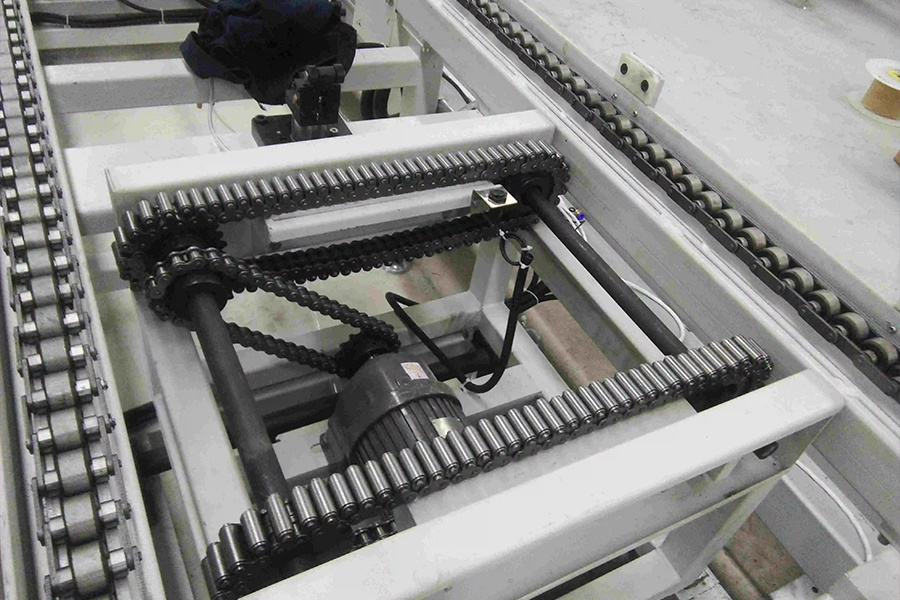
Lubrication issues in chain drives
I. Preface Friction is a common objective existence in nature, and human survival, life, and development are inseparable from it. However, people's conscious understanding, research, and even utilization of it is relatively late. It was not until the 1940s that it began to receive attention from countries around the world and research began. It was not until the early 1960s that it gradually formed a discipline called "Tribology". The study of friction is of great significance. First, energy consumption. According to statistics from the 1977 International Tribology Conference, 1/3 to 1/2 of the world's energy is consumed in the form of friction loss during the process of energy transmission in various machinery. Second, the loss of parts due to wear and tear. Statistics show that 80% of the failure of machine parts is caused by friction. Each link in the chain transmission has two pairs of friction pairs, namely the pin and the bushing, and the bushing and the roller, and friction also occurs during the meshing of the chain and sprocket. At present, in China, neither chain manufacturers nor users have paid sufficient attention to the lubrication problem in chain transmission. The phenomenon of poor lubrication or even no lubrication is widespread. Therefore, this paper will discuss the lubrication problem of chain transmission. II. Necessity of Lubrication For chain transmission, even if the chain and sprocket are designed to meet the conditions of use and environment, if the lubrication is poor, it is impossible to fully exert the design performance and ensure the service life. The wear amount of a chain with good lubrication and poor lubrication can differ by 200-300 times [2]. Once the lubrication is insufficient, the pin and bushing will wear, causing the chain and sprocket to mesh out of alignment, increasing noise, and lengthening the chain links. It may even cause chain breakage accidents. Poor lubrication between the roller and the bushing will cause these parts to wear out prematurely (see Figure 1) and become unusable. Therefore, it is a crucial measure to develop a reasonable plan for selecting the viscosity of the lubricating oil, the oiling position and method, the oiling interval, and the amount of oiling to ensure that the friction surfaces of the chain are fully lubricated. The following effects can be achieved: Reduce wear of friction pairs; Reduce power consumption; Prevent adhesion wear caused by adhesion; Eliminate overheating caused by friction; Ensure smooth transmission and extend service life. III. Selection of Lubricating Materials Any anti-friction substance that can reduce friction and wear between friction pairs and reduce friction resistance can be used as a lubricating material. There are many types, including lubricating oil, grease, and solid lubricants. When selecting lubricants for chain transmission, the lubrication form, ambient temperature, and matching between chain specifications must be considered. High-quality mineral oils with stable chemical properties are generally used, and those that are pure in composition, do not oxidize, and are free of impurities are the best. As for various used oils or greases, they may contain tiny particles and corrosive components, which can cause chain deadlocks and other failures, so they should never be used as chain transmission lubricants.

Mobile QR Code
Liuzhou Liulian Chain Manufacturing Co., Ltd.
Contact person:Ms. Nadine Niu (Export Manager)
Mobile/Wechat/Whatsapp:+86-15577202851
Add: No.2, North Fourth Rd.,East Area of Xinxing Industry Park, Liujiang, Liuzhou, Guangxi, China-545112
Tel: +86-772-5334396
Fax: +86-772-5331331
Email: lzchain@126.com liulian_chain@126.com
Website: www.lz-chain.com
Copyright © 2025 Liuzhou Liulian Chain Manufacturing Co., Ltd